NameStudio
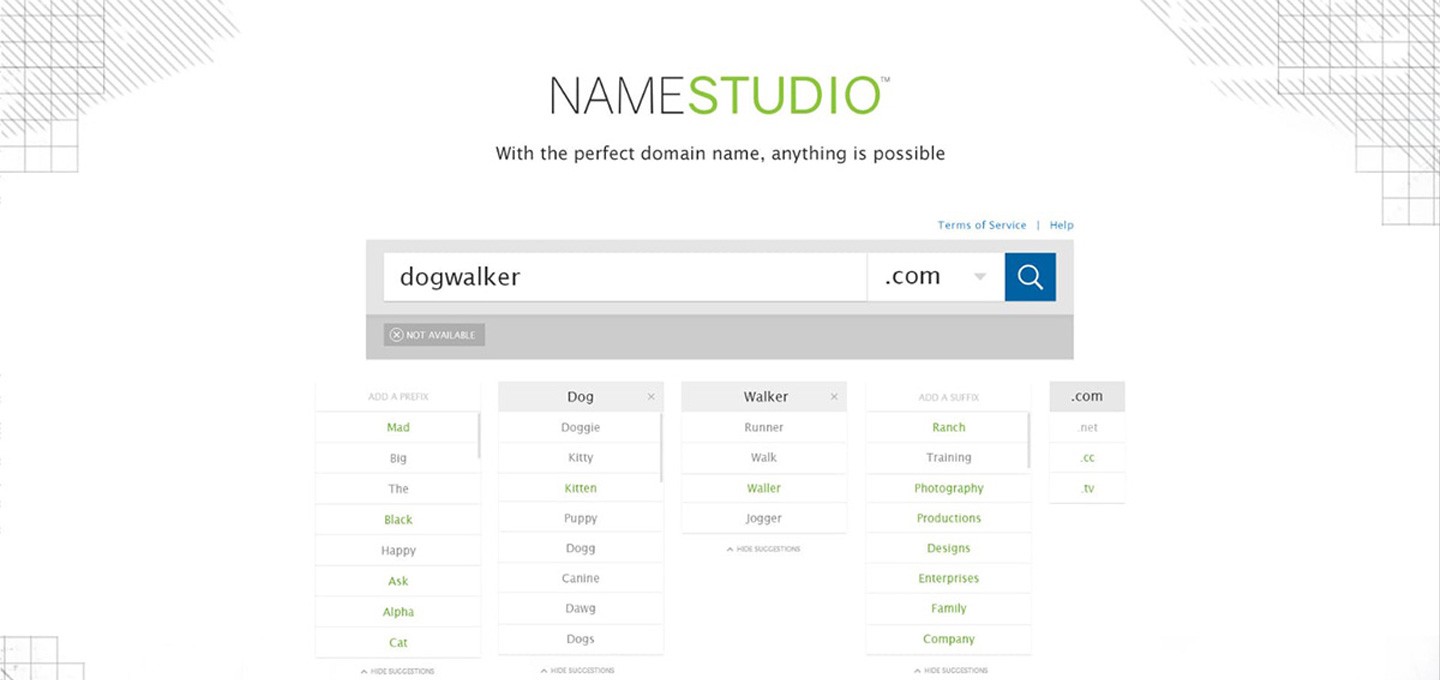
A domain name search tool powered by machine learning that helps people discover available .com names—even when they think all the good ones are gone.
2016
CLIENT
Verisign, Inc.
Role
UX Designer
Skills
UX Design, Product Design
Tools
“There Are "No Good .coms Left”
That's what people believe when they search for domain names and hit a wall of "Not Available" messages. But great names still exist—if you have the right tools and a little creativity. NameStudio was designed to prove that.
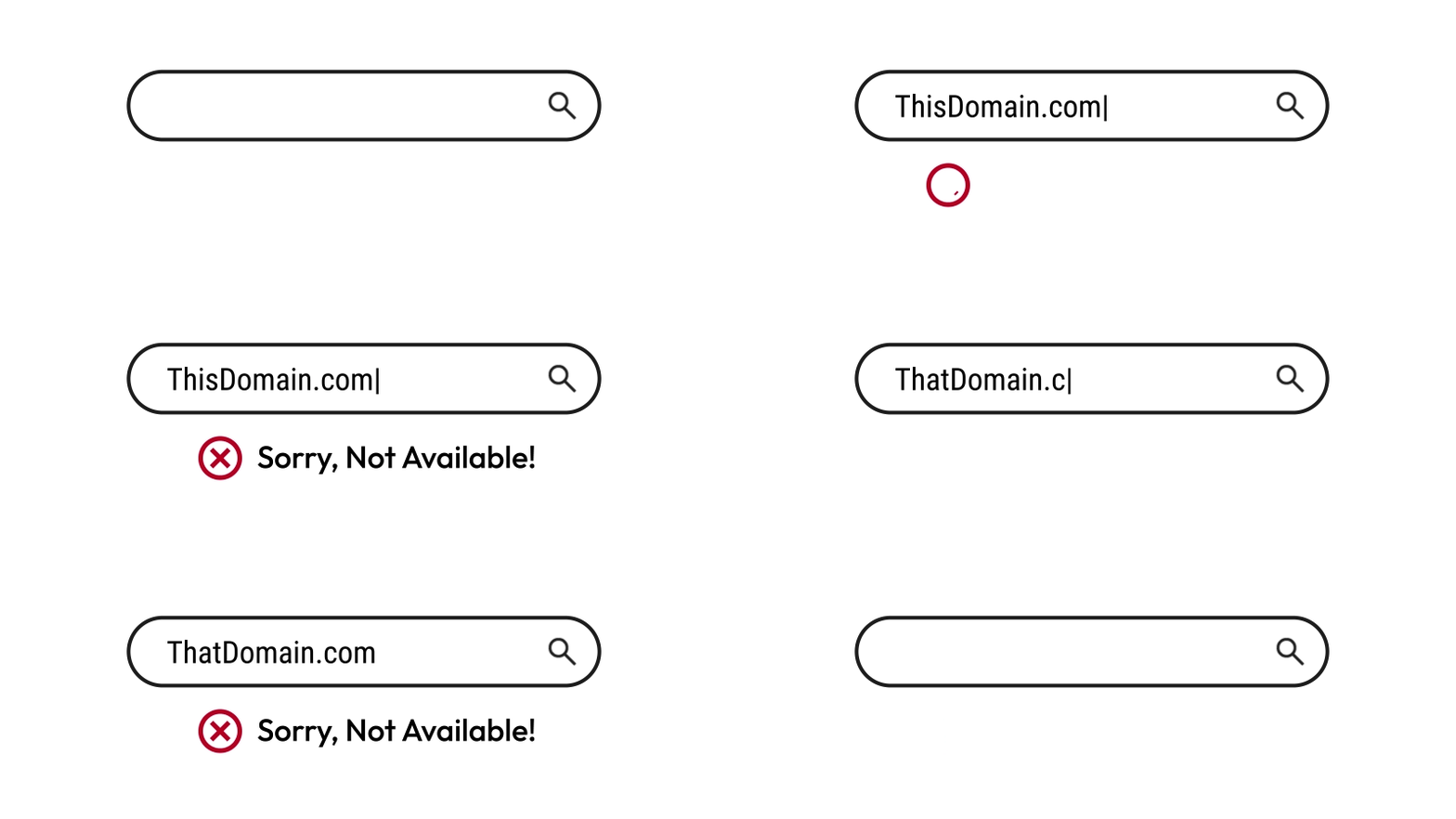
Finding an available, memorable .com domain name feels daunting. Users assume all the good names are taken after seeing endless "Not Available" results. The challenge was to build a tool that could help people discover great domain names by expanding their search in smart, creative ways—without overwhelming them with complexity.
Our Goals
Validate design decisions through real user testing and iteration
From Keywords to Smarter Suggestions
Working with engineers, product managers and executive leadership, I helped shape an early machine learning prototype. It broke queries into keywords, generated synonyms, prefixes, and suffixes, and then checked each variation against live domain availability. The raw system proved the concept but needed refinement to become usable.

What Real Users Taught Us
To understand how people would interact with the prototype, I led in-person usability sessions. Most participants navigated it easily and responded positively—but testing surfaced one critical design question:
Should we only show available domains, or also display unavailable results?
Users told us unavailable names were actually valuable. They provided context, revealed trends, and sparked new directions for brainstorming. This feedback became a cornerstone of our UX direction.
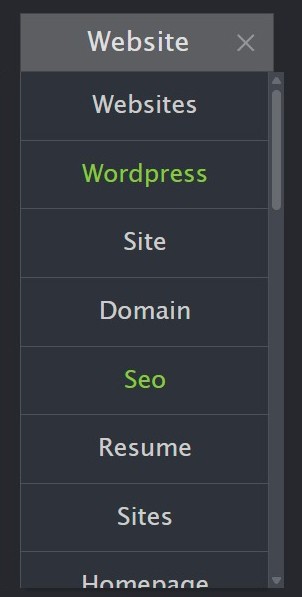
"Would unavailable results still aid discovery?"
Tools
User Research & Testing
I led moderated in-person usability sessions and ran multiple unmoderated studies via UserTesting.com to validate design choices. Testing revealed that mixing available and unavailable results actually improved the experience—users had no trouble interpreting color coding, and the mix inspired more creative thinking.
UI Design & Information Architecture
I redesigned the interface to clearly distinguish between available and unavailable domains while keeping the complex machine learning invisible to users. The design prioritized three things:
Clarity: Simplifying the UI so machine learning stayed behind the scenes
Scalability: Building modular patterns that could support API integrations and marketing campaigns
Flexibility: Allowing the tool to expand across refinements like synonyms, prefixes, suffixes, and TLDs
Design Decisions Based on Data
We ran multiple studies comparing different approaches:
Displaying only available results
Displaying mixed results with color cues
Testing alternative visual treatments
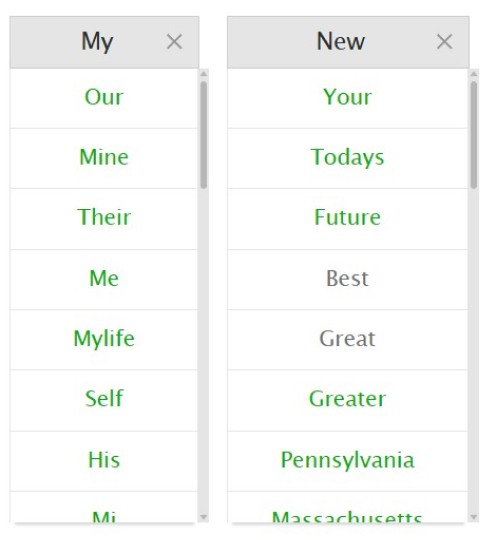
The outcome was clear: showing only available results sometimes improved conversion potential, but those results were often less relevant or confusing. Unavailable keywords gave users valuable context and helped them understand how the tool worked. More importantly, they inspired new ideas.
Solving the "Empty Results" Problem
Short or generic searches often returned few relevant results when limited to only available options. By including unavailable keywords as context, the tool maintained momentum in the brainstorming process—giving users inspiration even when the "perfect" domain wasn't immediately available.
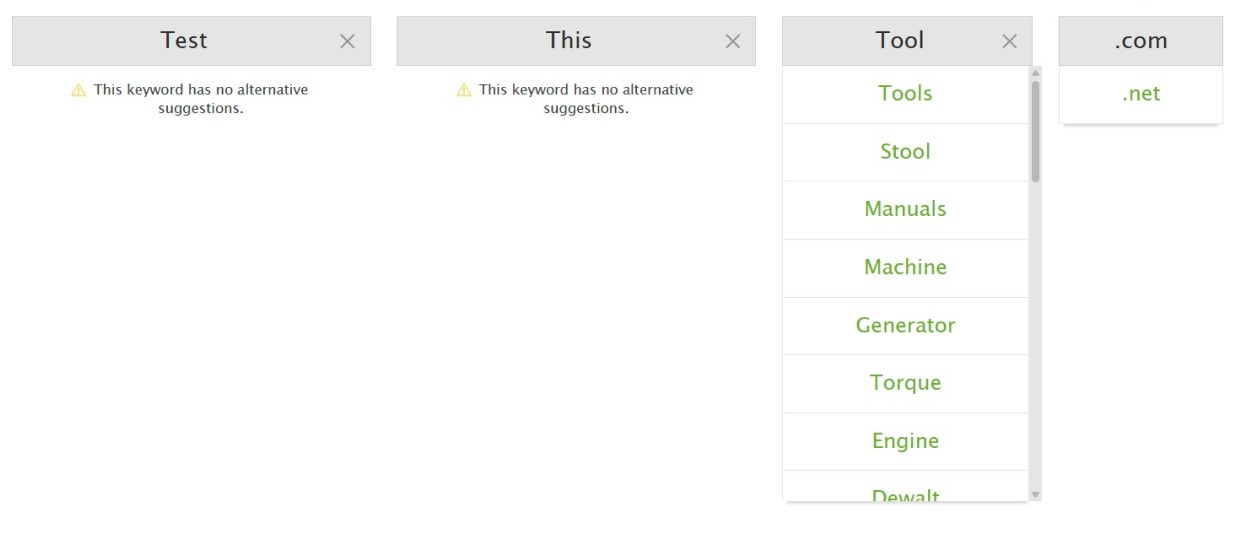
"Sometimes the best UX decision isn't about what's available—it's about what's understandable."
The Impact
In 2019, the project evolved from prototype to platform. NameStudio launched as a branded API powering domain search for major platforms.
U.S. Design Patent awarded (named contributor)
Adopted by major partners including Shopify, Wix, and others
Evolution continues: While Verisign has since transitioned from keyword-based brainstorming to AI-powered suggestions, the foundational UX work—validated user needs, established interaction patterns, and design system—laid the groundwork for that next generation of domain discovery